
Blog Post
The Smoking U-Turn
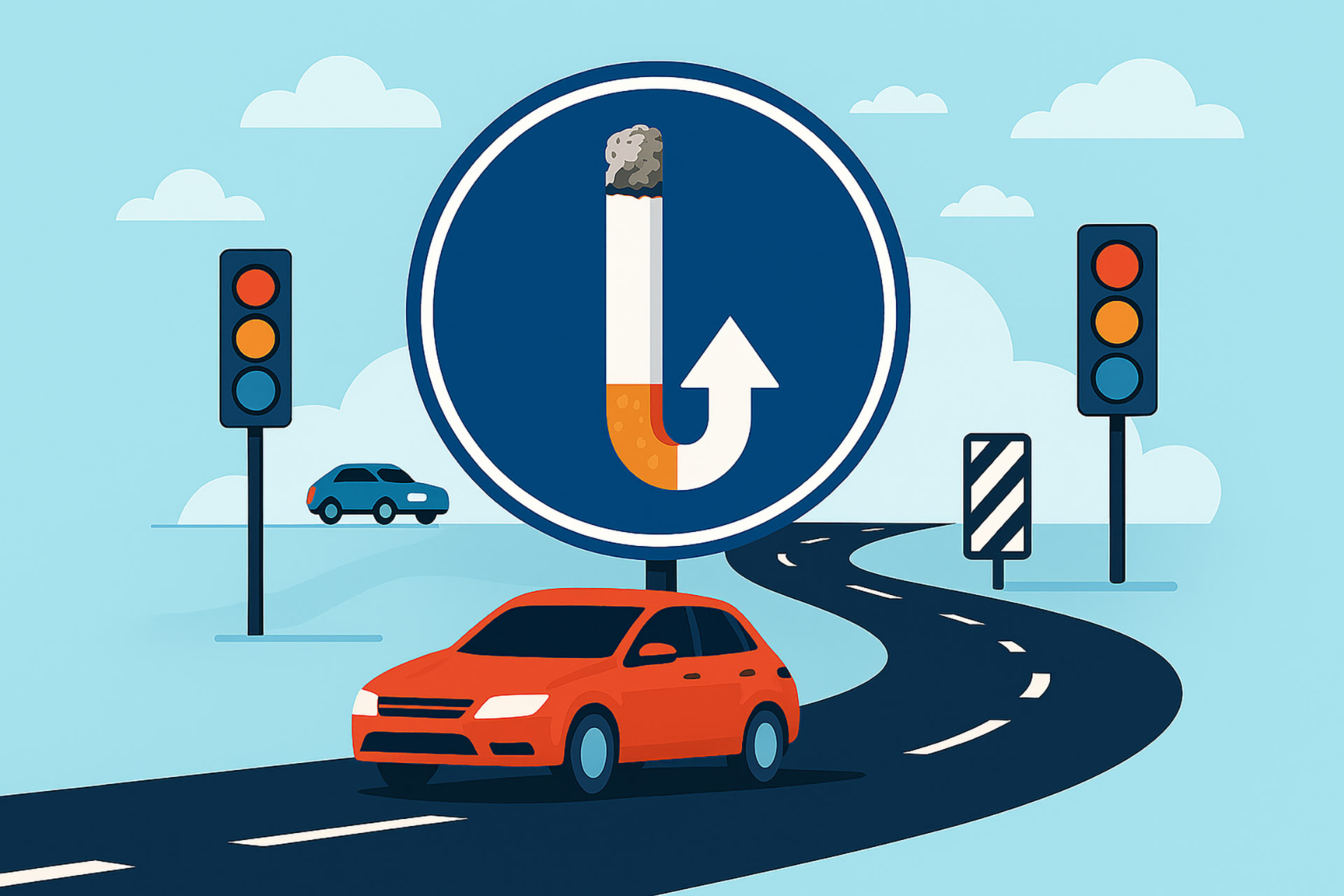
Two memories from my driving test came back to me this morning.
The first happened on the way to the test centre. My instructor had just finished his cigarette and attempted to flick the still‑smouldering butt out of the window, forgetting he hadn’t wound the window of his Nissan Micra down. It bounced off the glass, onto his lap, and in panic he flicked it onto mine.
Unexpected, but great preparation for an emergency stop. (For younger readers: yes, people smoked at work, including cars.. And no, windows weren’t electric, you wound them down.)
The second, and more relevant memory for this post, was perfecting the part of the test I feared most: the three‑point turn. Or in tabloid language, the U‑turn.
U‑turns keep appearing in the news; most recently the Government’s decision to hold local elections it had previously cancelled. It got me wondering: do U‑turns always have to be seen as a bad thing?
Margaret Thatcher famously made a virtue of saying, “This lady’s not for turning.” Today, the Government’s apparent string of U‑turns is routinely framed as failure by opponents and much of the media.
But logically, listening, re-evaluating, and then taking a different course should be seen as a positive. It means accepting short‑term dents to credibility in order to reach the right long‑term outcome.
Using the driving analogy: if you realise you’re heading the wrong way, it’s far better to turn around than keep driving, burning fuel and hoping the road sorts itself out.
The real issue isn’t the U‑turn itself; it’s the quality of the original decision.
If the initial process was muddled, rushed, or lacking input and diversity of thought, then the reversal looks messy even if it’s ultimately the sensible move.
Consider two recent examples:
- In June, the Government reversed planned benefit cuts after Labour MPs rebelled. Shouldn’t listening to MPs and testing the political reality have happened before the announcement?
- Today’s reversal over local election cancellations appears to follow a looming legal challenge. If a legal challenge was foreseeable (and they usually are), why wasn’t that legal risk properly considered earlier?
The lesson is simple: good decision‑making reduces the need for U‑turns. That means listening, scenario‑planning, and drawing on diverse perspectives before acting.
That’s exactly what my company helps organisations do, especially when decisions are made during crises or under pressure. We help map stakeholders, anticipate reactions, stress‑test scenarios, and build the communications plan that explains the decision clearly.
One final positive: I won’t be throwing cigarettes at closed windows… even under pressure (and yes, I did pass my test).
Latest News
Subscribe to Our Newsletter
Get Started
Ready To Make An Impact?
Let’s start a conversation about how we can make a lasting impact on your business or event.


Contacts
+44 (0)7939 188889