
Blog Post
A Busman’s Holiday
You might remember Busman’s Holiday, that slightly odd 1980s TV quiz show where teams of professionals battled it out for a trip to an exotic location – only to spend the week doing the same job there. Unless I dreamt it, I’m fairly sure one episode featured genealogists, golf club secretaries and survival experts going head‑to‑head. It was a format Alan Partridge would have been proud of.
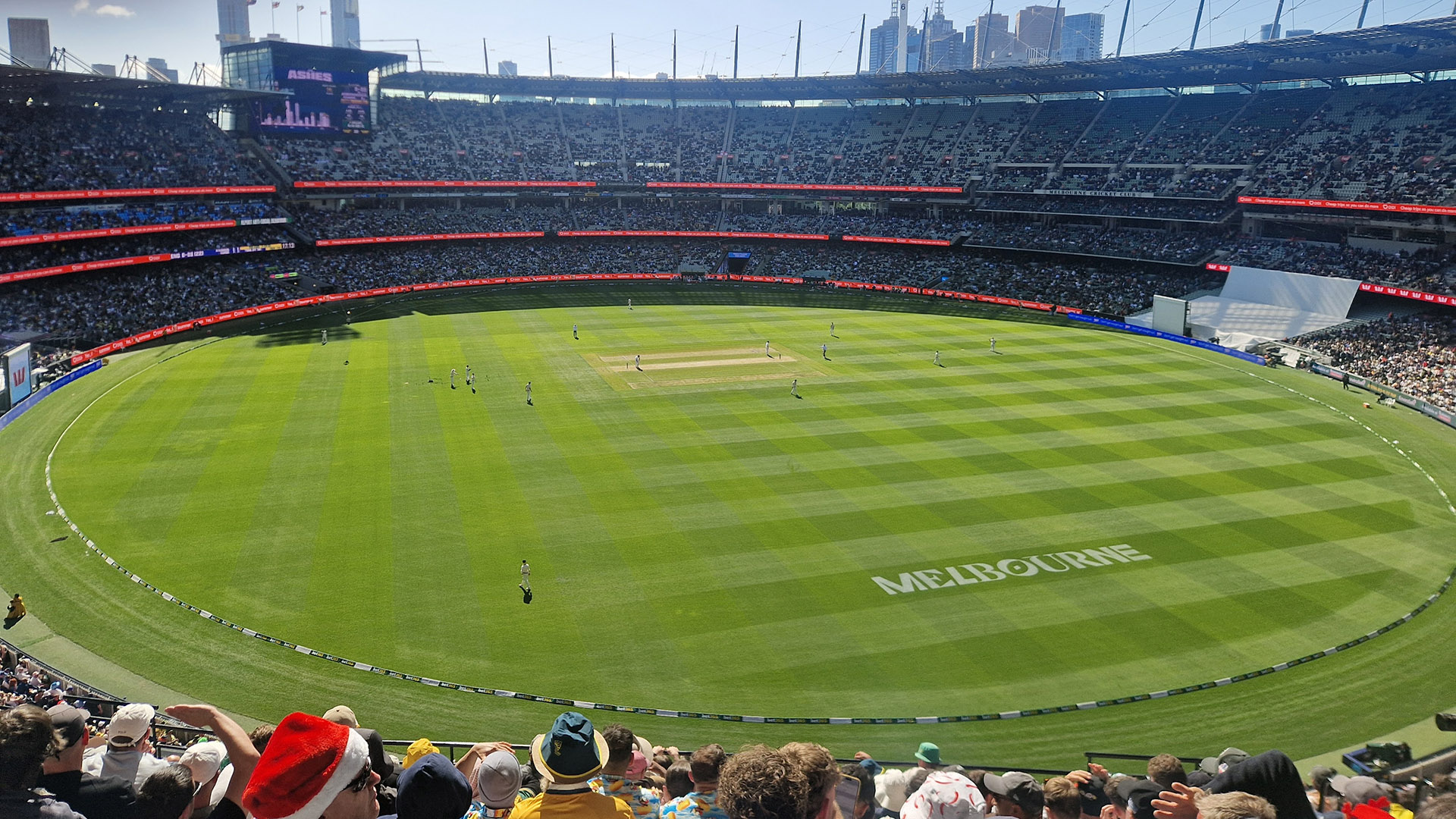
I was very fortunate this Christmas and New Year to take a family holiday to Australia which meant we could catch the Ashes Tests in Melbourne and Sydney.
The “Busman’s Holiday” part for me was checking out the stadiums, staging and promotion of the most important series in world cricket. This post is definitely not about England’s Ashes performance, there’s been more than enough said about that already.
My takeaways:
Cricket utterly dominates the Australian summer.
There is nothing else in town. TV adverts (featuring extremely questionable acting from the Australian players and some terrible English stereotypes), out‑of‑home advertising and the general national conversation all orbit around cricket. Kids and adults alike were playing it in every park, every beach and every backyard I visited. At both the MCG and SCG, children were even allowed to play on the concourse, with stewards and security joining in rather than shutting things down.
In the UK, by contrast, cricket is competing, and often losing, to football, even in summer. Add in the constant drumbeat of major global events like the Football World Cup or Olympics during the English cricketing summer, plus homegrown showpieces such as The Open, Wimbledon, Silverstone and Royal Ascot, and it’s easy to see why the sport has such a competition for attention in England whilst the Aussies have a clear run at it.
Our cricket grounds are historic, but small.
Lord’s seats just over 30,000. The MCG, more than three times that size, sold out for the first three days (even though the match barely lasted two). The SCG holds 48,000, and the New Year’s Test drew a record attendance across the five days. Even if Lord’s sold out all five days of a Test it would still be 50,000 short of the tickets sold for the two days of cricket we got at the MCG.
Given the new audiences drawn in by short‑form cricket like The Hundred, the huge potential of our Asian communities who would turn out in force for, say, a Pakistan “home” match here, plus the British habit of buying tickets for live sport and the growing sports‑tourism trend, we could genuinely do with a larger stadium.
London Stadium has already shown it can shift 100,000+ tickets for a weekend of baseball. With new pitch technology and guaranteed demand, perhaps cricket could fill a much bigger venue too. Although cricket here is playing second fiddle to football here, the audience for live sport is there, build, or adapt, it and they will come!
Australia understands the economic value of its stadiums.
The MCG and SCG are state‑owned, and the governments clearly recognise the tourism, spend and investment benefits of world‑class venues. Thousands of fans, including the free‑spending Barmy Army, were highly visible across Melbourne and Sydney. Judging by my own holiday costs, they must have delivered hundreds of millions into the Australian economy.
The wider value of iconic, well‑run stadiums goes far beyond ticket sales.
British sports fans are fanatical, but shouldn’t be taken for granted.
They travelled in huge numbers to the other side of the world and will continue to fill our smaller stadiums this summer, including for the women’s T20 World Cup. However, expectations of the fan experience are growing, they want more than just the sport and our events need to keep evolving, like the festival style weekend we now see at Silverstone. In addition a proper sports‑tourism strategy to attract overseas fans for all sports could bring enormous benefits to the UK and bring back in some of the money our fans are spending overseas!
The MCG and SCG aren’t perfect.
Fans were driven from their seats by lack of shade, catering queues were long (especially for coffee, why have stadiums not worked out there is now a demand for proper coffee not just beer), and more members than seats meant literal standing room only in places. On facilities and comfort, our stadiums more than hold their own.
Security felt surprisingly light‑touch.
Despite the terrible Bondi attacks only days before, bag and personal searches felt far more relaxed than at UK venues. There was almost a crush at the SCG as doors opened as members tried to get to unreserved seats. Our health, safety and security is stronger. I know the Aussie’s are a relaxed nation, but we also know that risks apply to us all. On the other hand, alcohol rules were stricter and the beer weaker, though you wouldn’t know it from some of the Barmy Army.
And finally: cricket needs a plan for two‑day Tests.
A friend of mine arrived in Melbourne ready for day three only to find England needed five runs to win on day two. The way Test cricket is now played there will often be much shorter matches and spectators will start to get grumpy about it. Could there be pre‑agreed reserve entertainment? Legends matches? A fan‑versus‑fan festival game? It wouldn’t be the same as live Test cricket, but it would at least be something.
Overall, it was a privilege to have this particular busman’s holiday. I only hope that whichever team won between the genealogists, survival experts and golf club secretaries had as much of a blast as I did.
Latest News
Subscribe to Our Newsletter
Get Started
Ready To Make An Impact?
Let’s start a conversation about how we can make a lasting impact on your business or event.


Contacts
+44 (0)7939 188889